
Tracing the Millard County Deed Chain Backward
Recorded transfers start with the Millard County Recorder. Its online Tyler index offers free index information plus PDF images where they exist, with a warning that material before 1987 may require an office search. That cutoff is the main boundary to plan around. Utah Archives Series 6101 supplies the historic backstop. The series holds seven reels of Recorder grantor and grantee indexes, covering deeds, final judgments, claims, patents, and decrees that partition or otherwise affect title. No exact earliest year is stated. Ask the office or check the catalog instead of guessing at a beginning date.
| Transfer Date | Grantor to Grantee | Instrument Type | Recording Reference |
|---|---|---|---|
| Date shown on latest deed | Prior grantor to current grantee | Recorded deed | Start from the instrument's Recorder reference |
| Date shown on prior deed | Earlier grantor to the prior grantee | Recorded deed or other title filing | Search the prior grantee entry backward |
| Date from an older index | Party names as listed in the index | Deed, judgment, claim, patent, or decree | Follow the index reference to the instrument |
| Date on each source | Confirm the party chain before proceeding | Read the legal description each time | Keep recording references in sequence |
The table gives a tracing structure, not a sample chain for any named parcel. Start online with the most recent transfer. Save the reference. Then work backward by party and legal description. At the online limit, shift to the Archives finding aid and ask the Recorder how to pull the underlying filing. Tax records can offer a dated clue, but they are no substitute for the chain of recorded instruments.
How to Read a Millard County Deed Chain Backward
Every current deed hands you a reference to the one before it. Read the parties and the legal description first. Then search the earlier grantee. Repeat while confirming the same land. A street address can change over time, or sit under a separate town grid entirely. The legal description and the parcel history are the stronger links between an old instrument and a current lot.
- Locate the latest deed that matches the parcel and legal description.
- Record the grantee, grantor, filing date, and instrument reference exactly.
- Search the grantor's prior acquisition as a grantee and compare its description.
- Continue backward until the online material ends, then ask for the older index or image.
- Grantor
- The party transferring an interest.
- Grantee
- The party receiving an interest.
- Chain of title
- The ordered sequence of recorded transfers and related instruments.
- Legal description
- The written land reference that links documents when a street address changes.
Millard County Online Deed Images May Stop Before 1987
The Recorder's Tyler page is blunt about limits. The index is free, available images are PDFs, and anything before 1987 may not be online. Plan around it. Before going offline for a former-owner search, save the closest online reference you can reach. A grantor and grantee name, a parcel description, and any document number give staff a much tighter path than a broad date range. The Recorder's own entry page displays the warning itself. Check the legal description on any result or deed. An image missing online may still sit with the Recorder or an older index. The 1987 line is a boundary, not a wall. Older records deserve a head start. Visit the Millard County Recorder's Tyler service before requesting an older record.
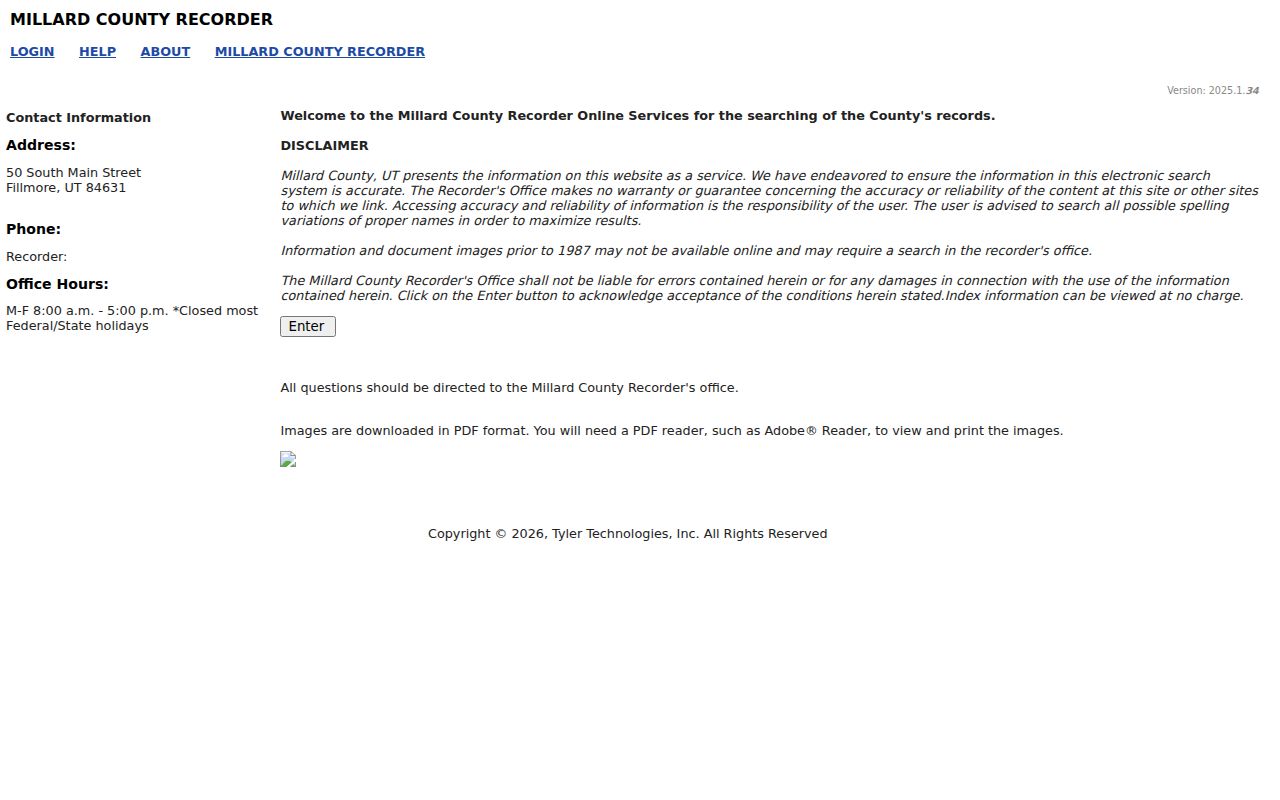
Online access and the image set can change, so check the Recorder's live notice before relying on either.
Millard County Series 6101 Is an Index, Not a Deed Image Set
Utah Archives Series 6101 lists seven reels of Recorder grantor and grantee indexes for Millard County. The finding aid covers deeds, final judgments, claims, patents, and decrees partitioning or affecting real-property title. It is an index, plain and simple. The reels hold names and references, not deed images. So the workflow splits in two: use a reel to find the reference, then ask the Recorder for the instrument itself. The finding aid gives no date range. Do not attach a first or last year without checking the catalog or the custodian. Cite the series number instead. Request reel coverage for your party and parcel. Spelling variants matter here, since an index search can turn on the exact form of a name. The Utah Archives Series 6101 catalog record holds the reel inventory. Use it before assuming what a reel contains. Once a reference turns up, the Recorder can establish what the filed instrument actually says. That step is the whole point.
Millard County Address Origins Can Break an Old Search
Millard County towns each have their own street-grid origins. Old addresses resist a current property search. Utah's address-origin table lists Delta, Fillmore, Hinckley, Holden, Kanosh, Leamington, and Oak City as separate grids. Never assume a Delta street number shares Fillmore's origin. A postal city will not tell you where a parcel sits within municipal limits, either. When a historic deed cites a street, carry that clue to the legal description and the parcel map before hunting a newer address. The county precinct map labels communities like Flowell and Sutherland separately. That separates postal labels from incorporated cities. Local geography is an index aid only. It never replaces the deed's land description. Use the Utah address-origin table when an older street clue seems inconsistent.
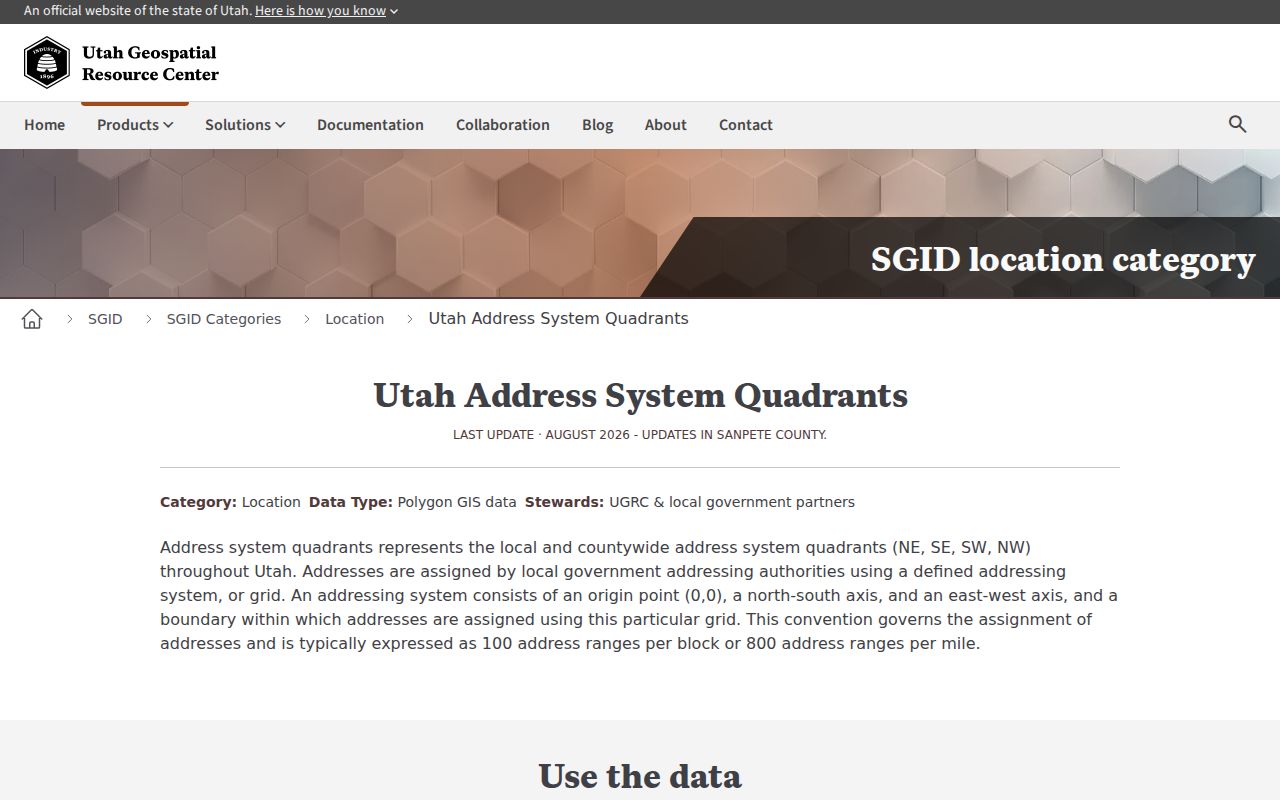
Preserve both the old address and the current legal description in a chain-of-title note.
Millard County Deed Copies Have Published Charges
Millard County's Recorder charges $0.50 per page for recorded-document copies. Staff-prepared copies cost $1 per page. A certificate under seal costs $5. Recording a document with up to ten legal descriptions runs $45. Each added description, mining claim, or water unit adds $2. Plat and survey fees sit on a separate schedule. Confirm with the Recorder how an older index or image request will be billed. Ask before sending payment.
The office sits at 50 South Main Street in Fillmore. Published hours are Monday through Friday, 8 a.m. to 5 p.m. The office closes for most federal and state holidays. Call 435-743-6210 before you drive over. Give staff a narrow request naming the parcel, the parties, and a likely recording window. That works far better than asking for a whole ownership history with no starting point.
Note: Rely on the Recorder's current fee schedule and instructions for copy pricing. A fee list is not a title determination.
A Vital Record Is Not a Millard County Property Transfer
A death record can explain a name or a date in family research. That is its value after a former owner has passed. It conveys nothing. Title moves through the recorded deed. It also moves through probate or another court instrument where applicable. And it moves through any later conveyance the Recorder has indexed. Treat no vital-record result as proof of ownership or of how an estate was divided. The Utah Office of Vital Records runs its own ordering route. It applies separate eligibility and access rules. That state service is distinct from Millard County's deed index.
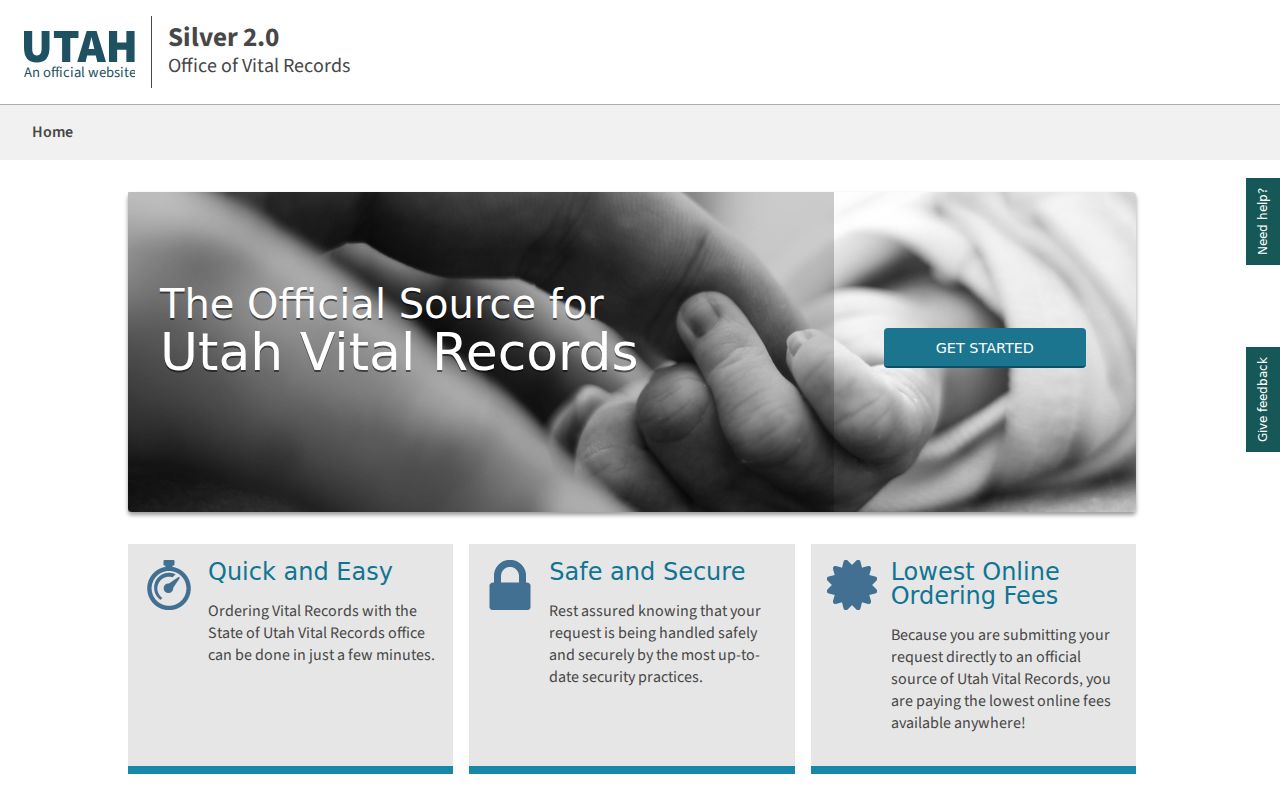
For any transfer tied to an estate, go back to the Recorder and the relevant court records.
How Far Back Millard County Ownership Records Reach
Millard County's online records carry a warning for anything before 1987. A separate archival index series spans seven reels. Neither source states a firm beginning year for the online files or the reel coverage. That matters for historical work. A missing result may reflect the coverage boundary, an old spelling, or an odd reference format. It may not mean a transfer never happened. Ask the Recorder and check the Archives catalog for the next available index. Do that before concluding the chain of title is broken.
Lawful use. Use Millard County former-owner records for property history and lawful due diligence. Do not use them to track, stalk, harass, or harm a living person.