
How to Find Who Owns a Millard County Property
The local route to a Millard County owner matches the address to a parcel first. Then the tax system becomes a discovery tool. The Recorder supplies the deed. The county Assessor's property page sends visitors straight to the Recorder search. No separate public assessor card exists. EagleWeb's documented owner-name mode can find matching tax accounts. Only a name is needed in hand. The latest recorded instrument is still the better check that a transfer actually happened.
- Use a Millard County map and local address grid to identify the parcel and legal description.
- Search EagleWeb by parcel, account ID, or owner name to locate the tax account.
- Search the Recorder index for the deed that matches the parcel and compare its named parties.
- If an entity is named, use Utah's official business search for entity filings, without treating an agent as the beneficial owner.
- For a recent transfer, check the newest recorded deed because the tax notice can lag the roll update.
Millard County EagleWeb Finds Tax Accounts by Owner
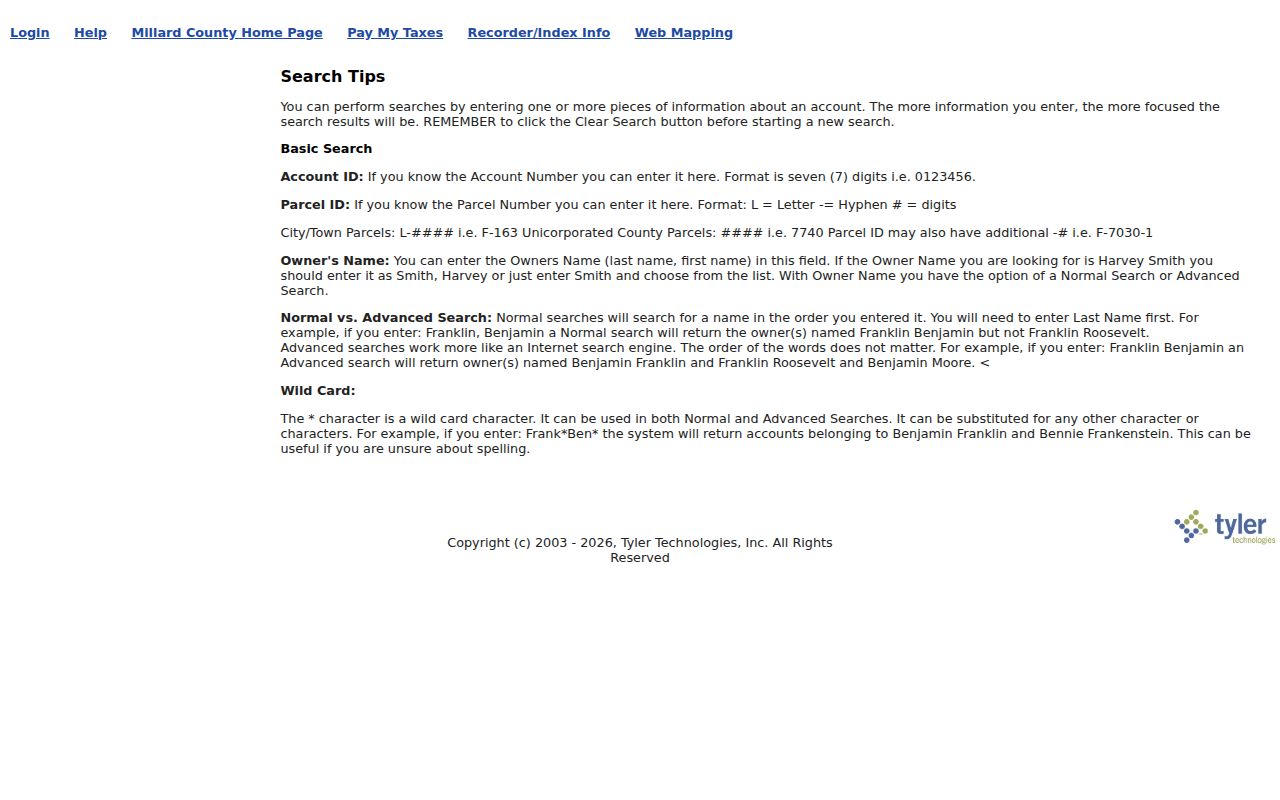
The Treasurer's help page documents owner-name searching in both normal and advanced modes, with wildcard guidance included. It also accepts account and parcel IDs. That makes EagleWeb a practical first pass. A name alone is enough to begin. A returned name is a match within the tax system, though, not a certified finding that the person owns the land today.
The official examples list a town parcel such as F-163, an unincorporated parcel such as 7740, and a split identifier such as F-7030-1. Keep the punctuation as published. A name search can return several results. Narrow them with location and parcel details. Then move on to the deed index. Compare the parcel description and keep the account number, so two similar-named properties never get mixed.
See the Treasurer's EagleWeb help for local input formats.
Keep a dated note of each account search so any later ownership update can be judged against a fair comparison point.
Millard County Deeds Confirm Recorded Transfers
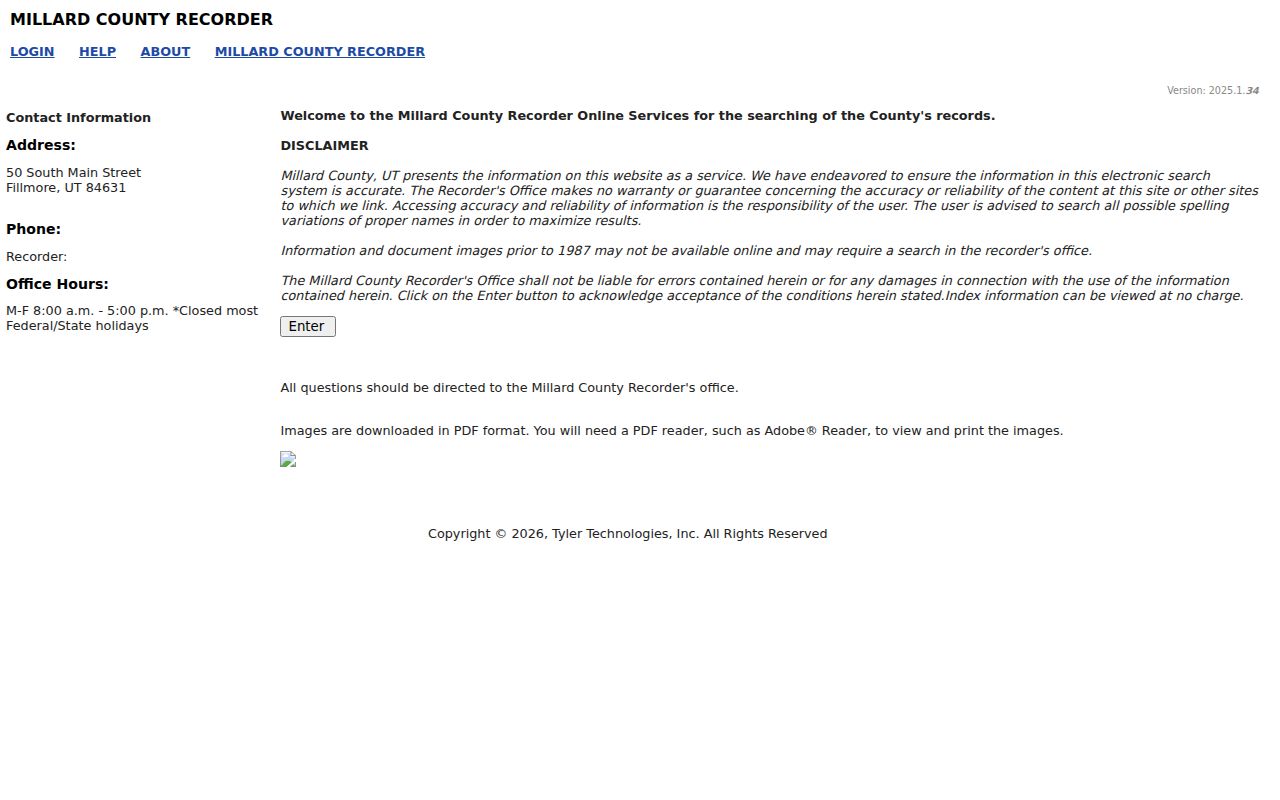
The Recorder's Tyler index is the legal-record source for filed deeds and other instruments that affect title. Index information is free. Available document images download as PDFs. The landing page carries a warning. Information and images before 1987 may not be online. For that older period, bring known party names, a parcel description, and a reference to the Recorder's office rather than trusting an empty online result.
A current deed identifies the parties and the legal description tied to the recorded transfer. Compare those names with the tax account. The tax notice may have been printed before an ownership update, though. The deed is the better record for transfer dates. The Treasurer keeps custody of payment status.
The official Recorder Online Services index explains the available route and its pre-1987 limit.
To build a backward chain, follow each grantor and grantee link by link and confirm every legal description along the way.
Millard County Ownership Updates Can Trail a Notice
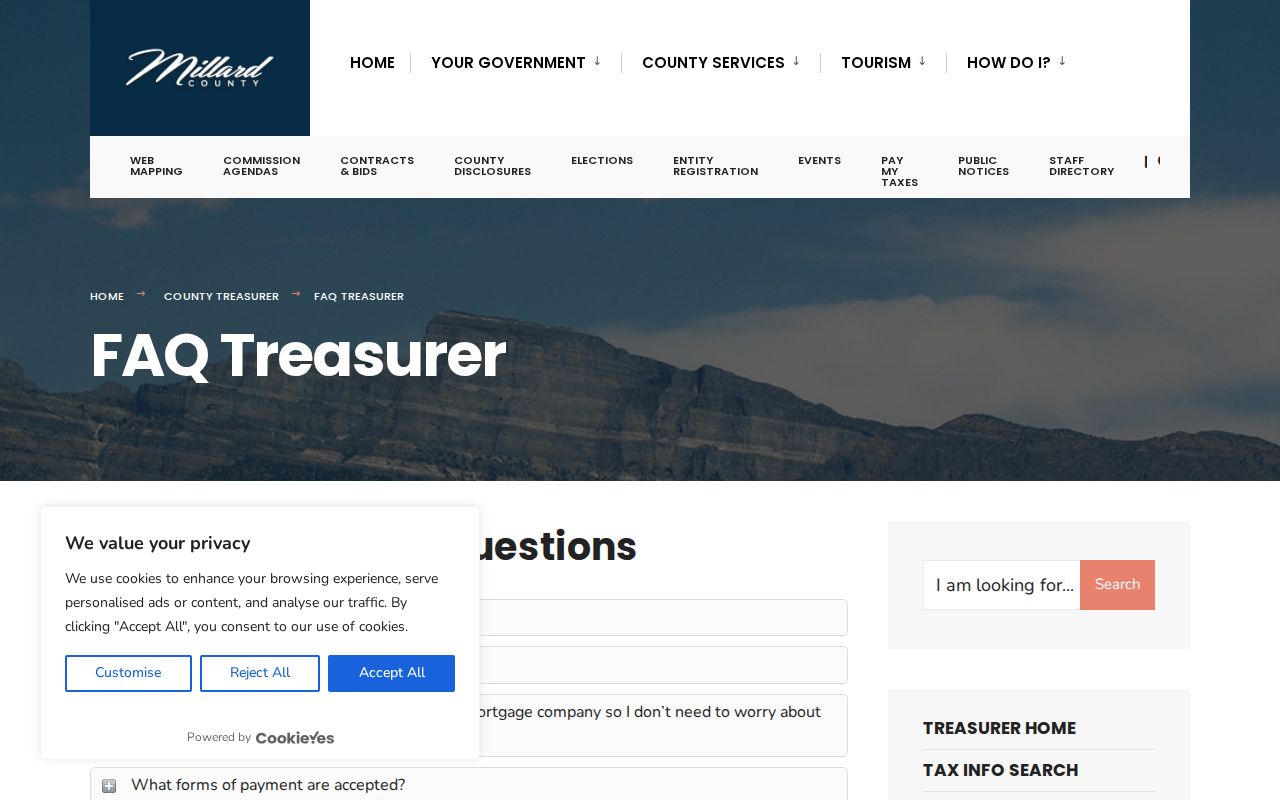
The Treasurer's FAQ documents a timing wrinkle with real effect on a current-owner lookup. A tax notice can still go to a former owner. That happens when the roll was printed before a sale update finished. A notice date and a recording date answer different questions. One explains the bill cycle. The other records a transfer. When they seem to conflict, ask the Treasurer whether the account has changed. Also check the Recorder for the newest deed.
A mailing address can differ from the street address. A person or entity may receive tax mail elsewhere. The occupant may differ from the titled party. The notice's addressee is not a contact instruction. It is also not proof of who lives at the property. The county's tax FAQ describes the notice and ownership timing.
When the question is which name belongs to the newest transfer, rely on the latest recorded instrument.
Where Millard County Owner Information Appears
Different county and state sources expose different owner clues. EagleWeb permits an owner-name search for tax accounts. The Recorder index points to recorded parties and instruments. Utah SGID's parcel owner-type field stays generalized and never gives a private person's name. The Assessor page simply routes visitors to Recorder search rather than serving as a standalone result card. Confirm an owner with the actual recorded document instead of combining these clues into one supposed profile.
| Source | Owner Info It Gives | Access |
|---|---|---|
| Treasurer EagleWeb | Searches tax accounts by owner name, parcel ID, or account ID | Official tax-account system |
| Recorder Tyler index | Free index information and available recorded-document images | Official deed and instrument index |
| Assessor information page | Directs property-search users to the Recorder | County Assessor website |
| Utah SGID parcels | Generalized federal, private, state, or tribal owner type | State parcel layer; not a private owner lookup |
A deed's named owner is not always the occupant. Day-to-day upkeep may fall to someone else. Parcels can be titled to entities, trusts, or estates. The public record may not name every person with an interest behind that entity. A registered agent is a contact point for a business filing, not proof of beneficial ownership.
Utah Entity Records Add Context for a Business Owner
A deed sometimes names an LLC or corporation instead of a person. Utah's Division of Corporations and Commercial Code keeps the entity filings. You can check against it. Copy the exact entity name from the Recorder's deed first. Then compare it with the official business record, letter for letter. One caution deserves mention. A registered agent serves as an entity's formal contact. The agent is not the person who ultimately owns every property interest behind it. The Division of Professional Licensing lookup is a different state tool. It covers license holders, not property title.
Trusts and estates appear in Millard County property records too. The public record may name a trustee or personal representative rather than each beneficiary. That gap can matter. When it does, read the recorded instrument itself and consult a legal professional. An owner search answers who holds record title. It should not stretch into guesses about family or business relationships.
The official Utah Division of Corporations and Commercial Code site offers business search access. For the current owner-of-record workflow, see the current-owner guide. It also covers what a tax account does not tell you.
Millard County Voter Records Do Not Prove Property Ownership
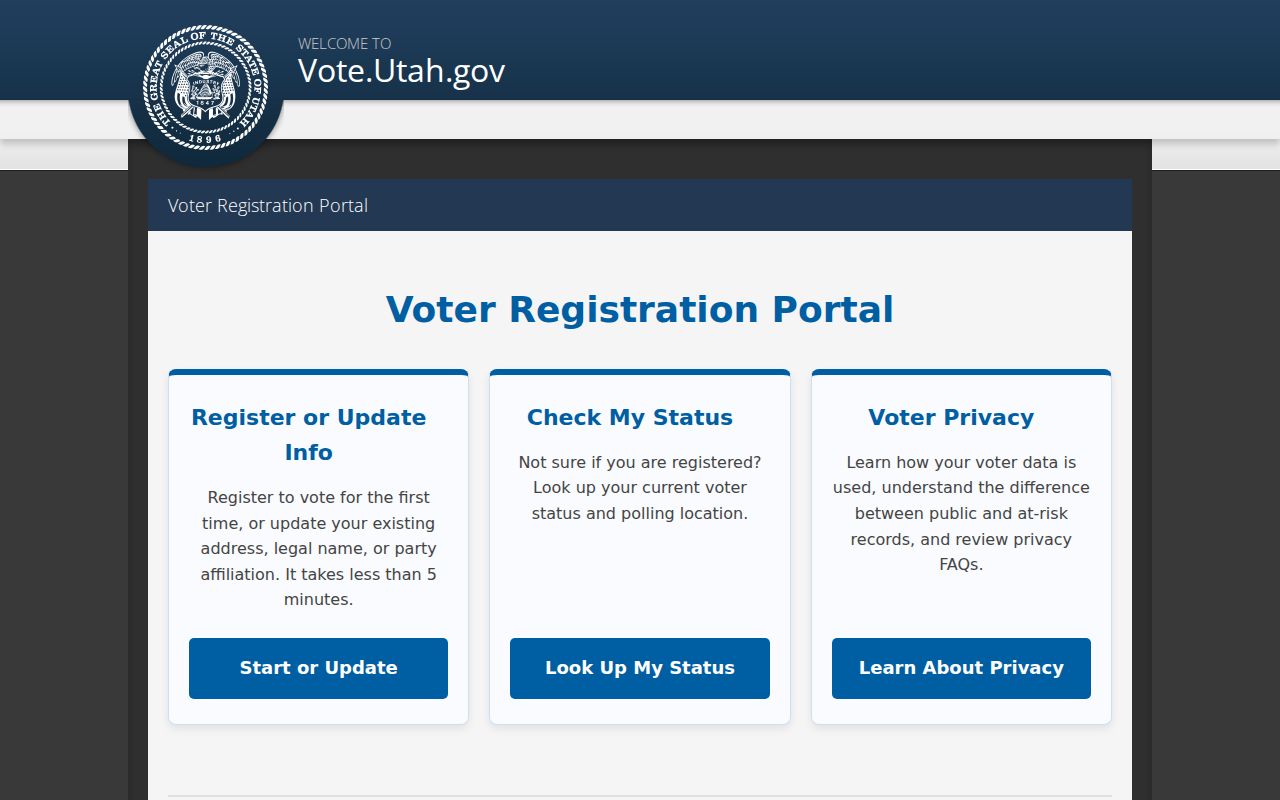
A name search can drift into unrelated databases. Voter registration never proves who holds title to a Millard County parcel. Utah's voter portal splits public voter data from protected At-Risk records. Use the Recorder's deed records and county tax account. Treat identity records as a separate lane. The Utah voter-registration portal explains its public and At-Risk pathways. That privacy screen is not a property-owner result.
Keep the voter portal for voter-record questions. Ownership checks belong with the recorded property chain and the current county account.
What a Millard County Owner Search Cannot Establish
A tax account name is not a title opinion. A deed can miss unrecorded interests, and neither source proves who lives at a parcel. The mailing address may differ from the situs. A recent deed can also outrun a tax notice prepared before the roll changed. Use these property records for research. When a transfer or party name matters, follow up with the record's custodian.
Lawful use. An owner lookup is for property research, due diligence, and civic use. Do not use owner information to stalk, harass, threaten, or harm a person.