
What Millard County Property Tax Records Separate
The Assessor and the Treasurer split the work. Appraisal belongs to the Assessor, who values taxable property and applies any classification or exemption. The Treasurer turns that roll into notices and bills. One number never tells the whole story. A careful taxpayer in Millard County compares the parcel, the taxable value, the account, and the notice status before assuming the tax calculation is complete.
| Field | What It Shows | Where |
|---|---|---|
| Market value | Assessor's estimate of the property's market value as of the valuation date | County Assessor |
| Taxable value | Value after the property's applicable classification or exemption | County Assessor |
| Tax account | Account, parcel, or owner keyed tax search | County Treasurer's EagleWeb |
| Tax notice and status | Bill, collection, and delinquency information maintained by Treasurer | County Treasurer |
| Appeal record | Application and supporting evidence for a valuation challenge | County Auditor / Board of Equalization |
Market value and taxable value often differ. The gap depends on classification, exemptions, and the assessment cycle applied to each parcel. The tax bill adds another layer. Account status changes what is due. Millard County's assessment-process page shows how the Assessor, Auditor, Board of Equalization, and Treasurer hand information through the cycle.
Millard County EagleWeb Formats and Notice Clues
The Treasurer's help page saves failed searches. Parcel formats in Millard County vary by location and history. A city or town identifier may use a letter and hyphen, a rural parcel may be a plain number, and a split parcel may carry an added suffix. The county's own examples include F-163, 7740, and F-7030-1. Keep the exact format from the last tax notice. Copy it rather than stripping punctuation.
Owner-name searches offer normal and advanced modes, with wildcard guidance on the help page. A broad name may pull accounts tied to multiple parcels or to an entity. Check the parcel description first. Confirm the account key too. Timing matters as well. A notice can carry a prior owner's name after a transfer if the roll was already prepared, so the envelope is a timing clue rather than a title record.
The EagleWeb tax-search help page shows the county's own key formats.
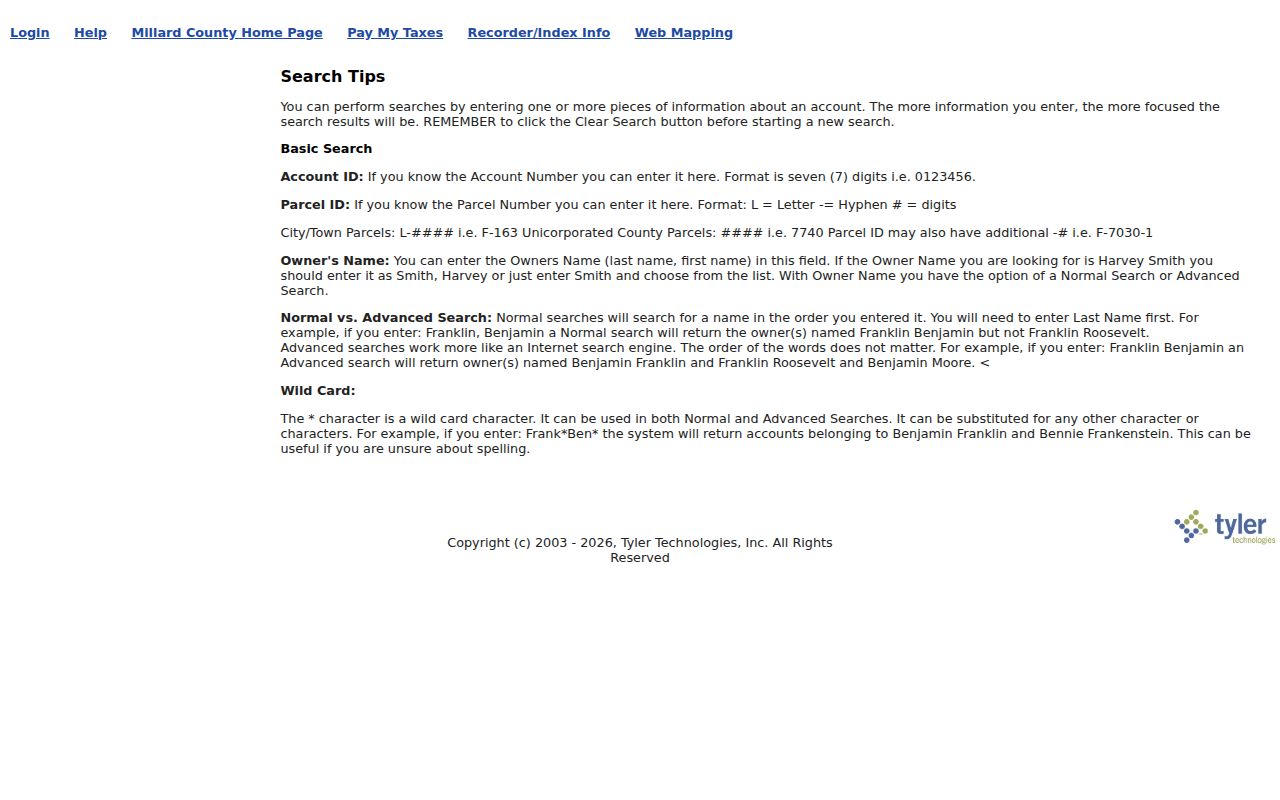
After a matching account appears, save its parcel reference. Then check tax status on the current official screen.
Millard County Primary Residence and Farmland Treatment
Classification drives the tax rate. The Millard County Assessor real-property page explains that a primary residence is taxable at 55 percent of market value. Vacant land, commercial property, and second homes are taxable at 100 percent. These are distinct classifications. Guesswork should not decide which one applies. Utah's Farmland Assessment Act adds another path, under which qualifying farmland in Millard County is assessed on productive capability rather than a residential market measure. The practical task is comparison. Line up the assessment record, the parcel's use, and any required application or questionnaire. A rural address alone proves no farmland enrollment. A mailing address alone proves no primary-residence status either. Ask the Assessor which classification is recorded and how a question or correction is handled.
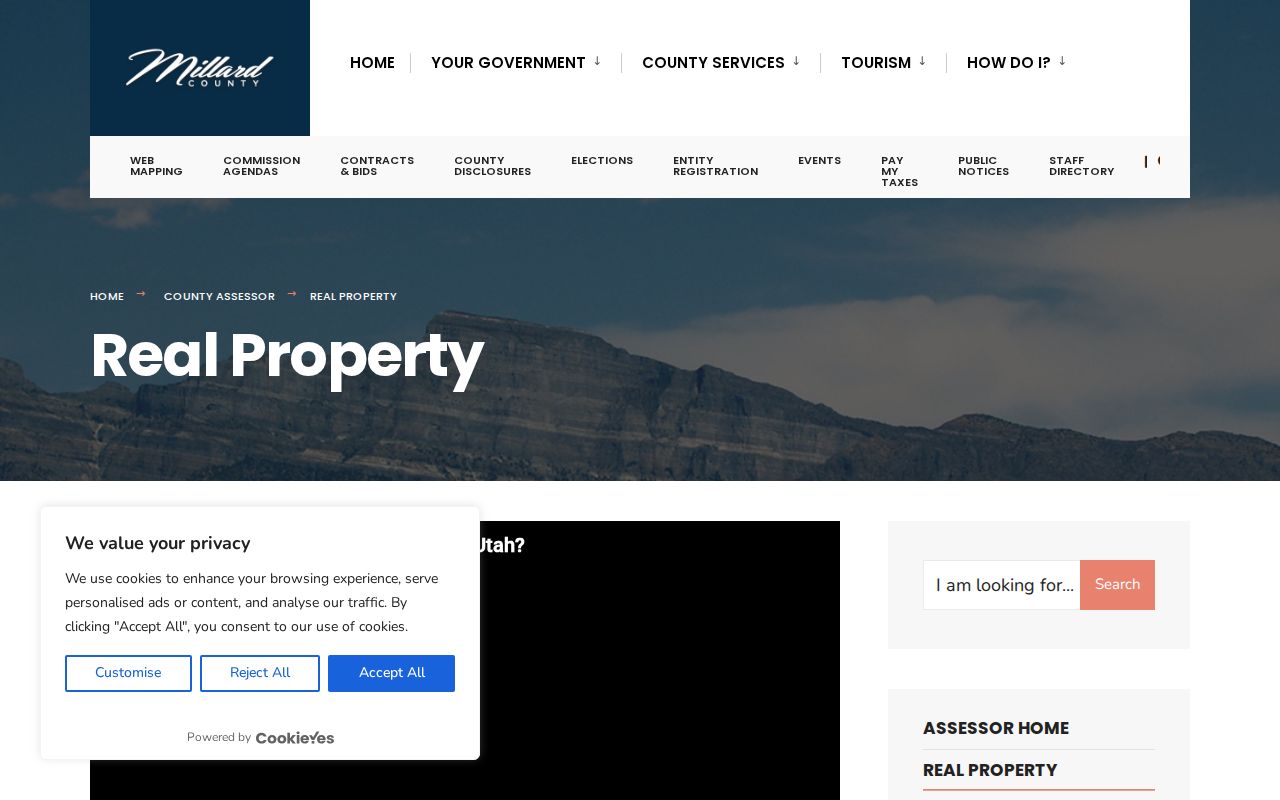
The greenbelt page and questionnaire are the county's source for farmland classification details.
Millard County Tax Notices Move Through Four Offices
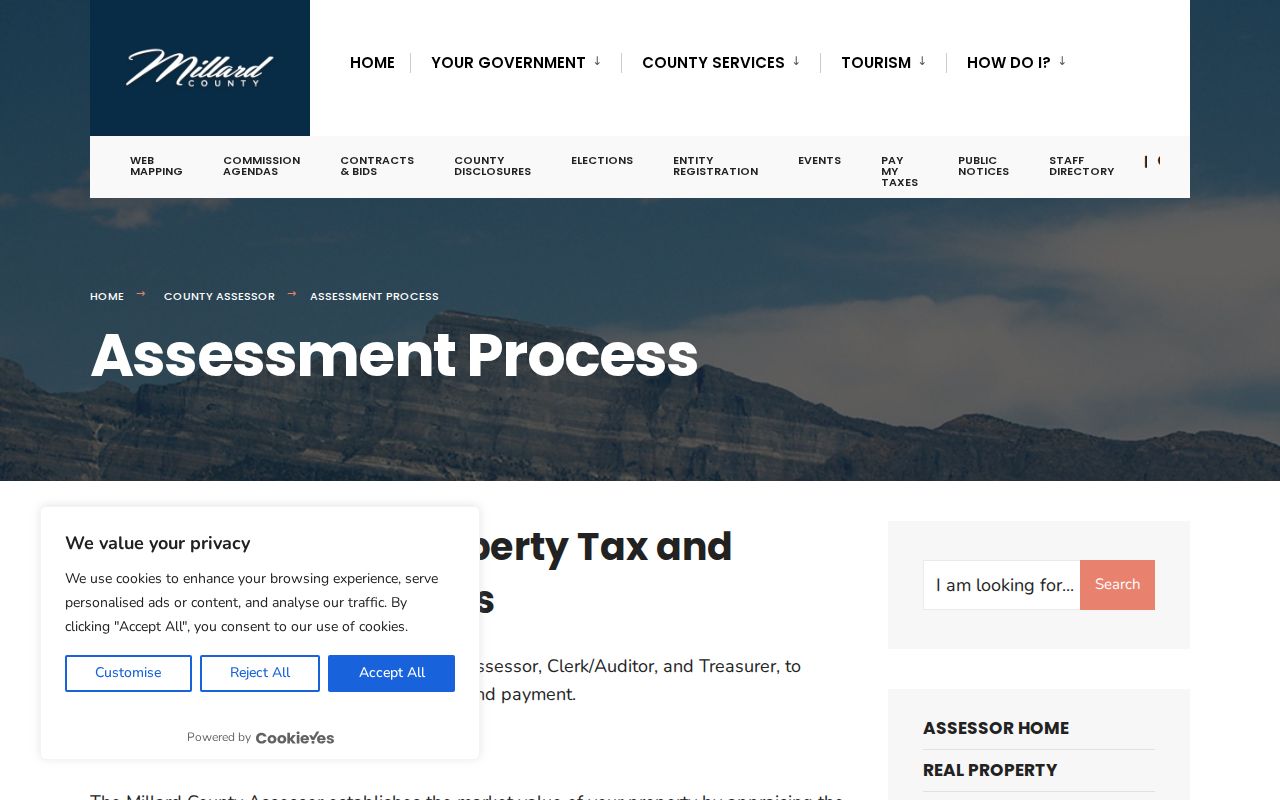
The county's assessment workflow makes clear that a bill begins with valuation and classification. The Assessor appraises taxable real property as of January 1, performs a detailed review every five years, and makes annual adjustments between reviews. The Auditor supports the valuation challenge process, the Board of Equalization considers appeals, and the Treasurer issues and collects the tax notice. An owner who is uncertain which office to contact should first identify whether the issue concerns value, a formal appeal, or the account balance.
The official workflow screen is useful because it distinguishes those duties instead of presenting one combined property tax record. Keep the notice and parcel identifier available when contacting an office, and state whether the question is about a number, a classification, a deadline, or a payment entry.
Review the county assessment process page for the current handoff.
So a tax account never substitutes for deed history.
Millard County Delinquent Accounts Need a Current Check
The Treasurer posts a public delinquent-tax listing. The office also explains how to make a basic records request by online search, phone, or email. Treat any listing as a dated snapshot. Then confirm the parcel on the current EagleWeb screen. A delinquent entry alone proves no tax sale, foreclosure, or transfer of title. For a later recorded action, search the Recorder separately. Ask the Treasurer what collection stage currently applies. Millard County property tax records can change after a notice or list is published. Keep the list date and the account key. Avoid copying old figures into a later decision without checking the current custodian. The tax page also separates the public listing from the tax-sale process, which may require another notice or recorded instrument to show completion. The county's delinquent-tax listing is the official public reference.
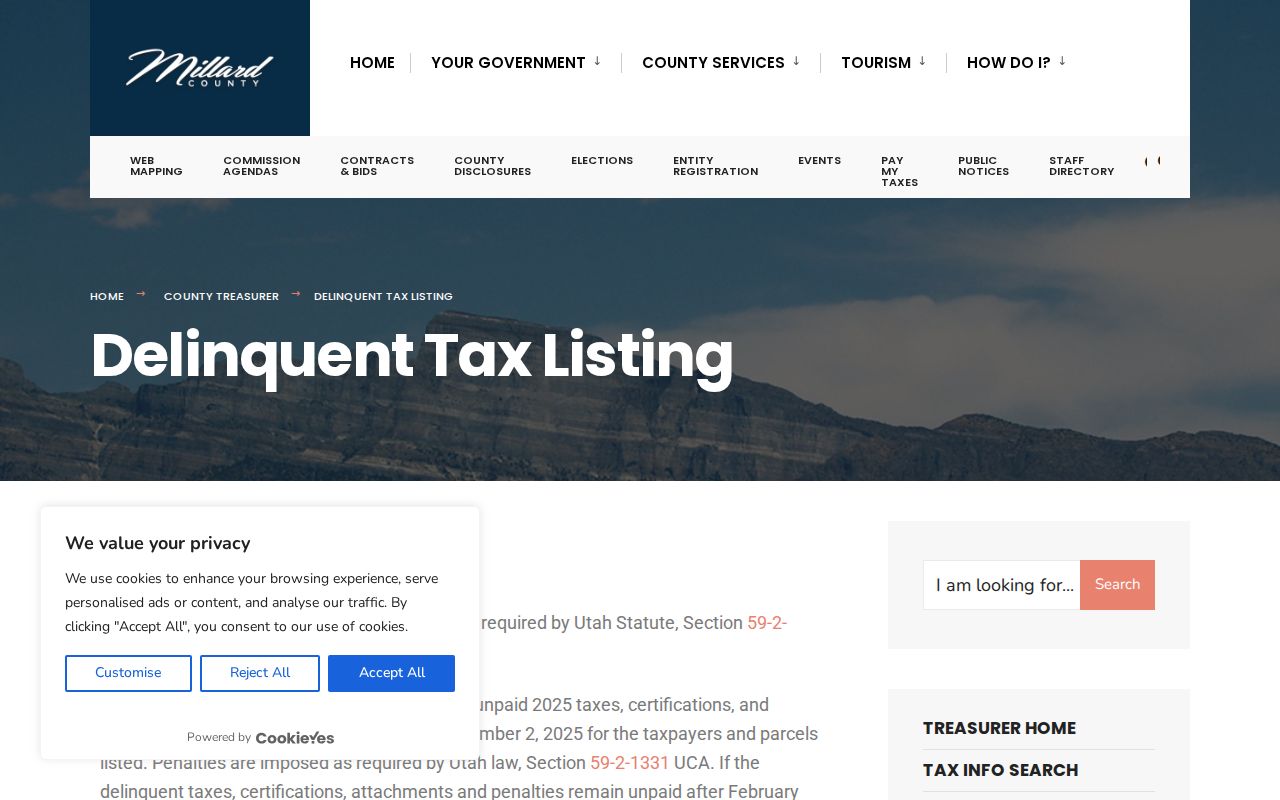
When a public page does not answer a narrow account question, the Treasurer's records-request page supplies the route for Millard County delinquent tax accounts and balances.
How to Find a Millard County Tax Account
Millard County property tax records start with the right identifier. An account ID from a tax notice works best. Without one, try the parcel ID exactly as written. Keep any local prefix or split suffix. Or search by owner name instead. When the search returns several matches, compare parcel descriptions. Do not settle on a name that merely looks familiar. Note the result date whenever you record a tax status. The EagleWeb tax-search page is the Treasurer's live lookup for every account. Its entry screen is where a Millard County property search for taxes begins.
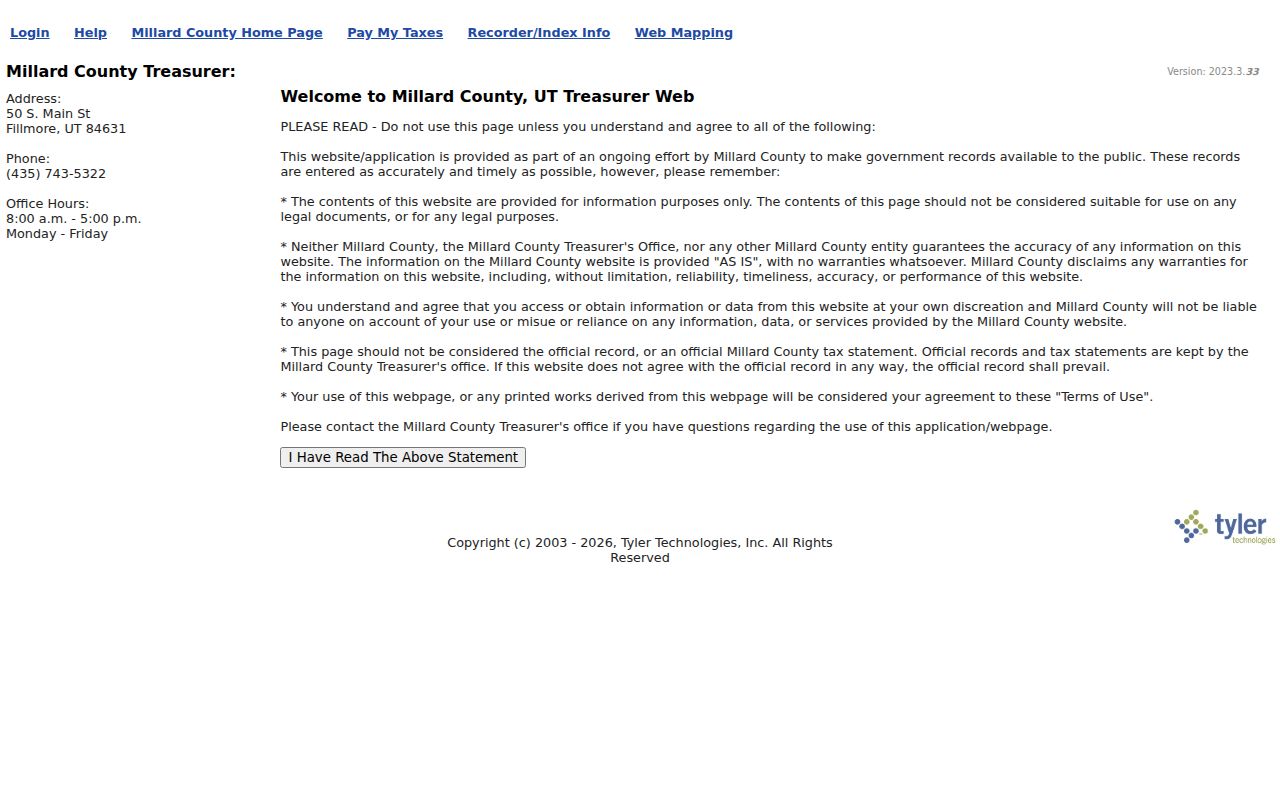
Confirm the current tax year and account status on the live source before relying on any saved copy.
- Open the Treasurer's EagleWeb tax search and enter an account, parcel, or owner key.
- Check that the result refers to the correct land by its parcel description.
- Use the account details and current notice to confirm the status and tax year.
- Ask the Assessor about valuation or classification, and the Treasurer about payment and delinquency.
- Market value
- The Assessor's estimate as of the county valuation date.
- Taxable value
- The portion used after the applicable classification or exemption.
- Tax account
- The Treasurer's record for a parcel or account, including billing status.
- Delinquent listing
- A published status report, not proof that a later sale or foreclosure is complete.
Millard County Assessment Appeals
Millard County gives owners an appeal route for disputed valuations. The route runs through the Auditor and the Board of Equalization. The window closes on the later of two dates. Millard County sets the deadline at 45 days after the value notice is mailed. It can also be September 15, whichever comes last. The county's appeal page supplies an application. It also asks for evidence supporting the value you request. Keep in mind that an appeal challenges assessed value, not the tax bill itself. A question about a tax bill is a different errand.
Appeal window. County instructions state a deadline of the later of 45 days from mailing of the value notice or September 15. Confirm the date on the current notice and application.
How Millard County Owners Build an Appeal Record
Building an appeal record starts with the value notice and the parcel identification. From there, gather documents that speak to the value being challenged. The Assessor recognizes sales comparison, cost, and income approaches, depending on property type. Evidence should fit the subject property and the relevant valuation period. A tax bill total is not proof of market value. Leave it out of the packet. The deadline is the later of 45 days after the value notice is mailed or September 15. The county's Board of Equalization appeal page posts the application and instructions that control. Keep the notice date and proof of submission. For payment questions, delinquency status, or a mailing address on a bill, the Treasurer handles those. The appeal form does not.
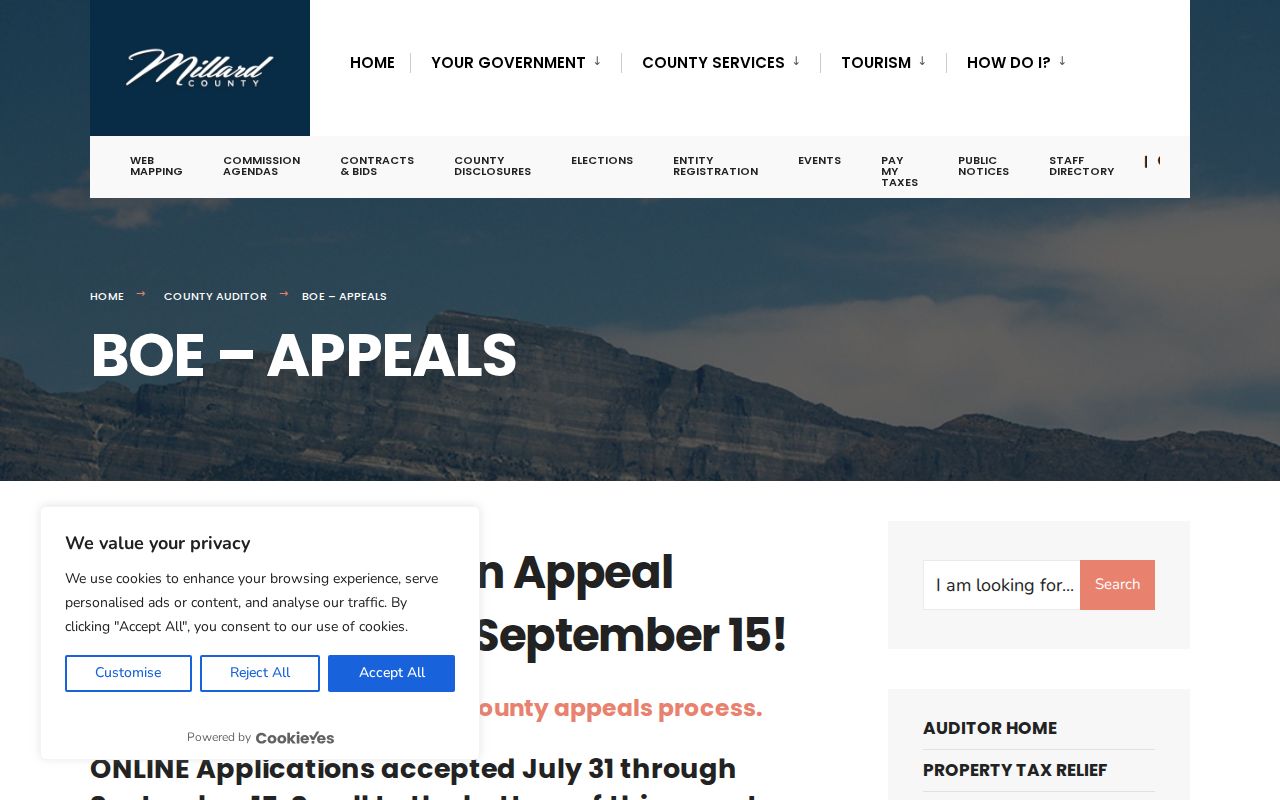
File on time. Use the later-of-45-days-or-September-15 rule from the current county instructions and verify the date on the notice.